

Lincoln, Magna Carta, and the Foundations of American Democracy.
Yesterday, in his historic address to the United States Congress, King Charles III reminded the world of something both timeless and deeply relevant: that the bond between the United kingdom and the United States is not simply political or economic—it is constitutional, cultural, and centuries old.
At the heart of his speech was a powerful reference to Magna Carta—the document that first enshrined the principle that no one, not even the sovereign, is above the law.
This was not just a historical aside—it was a reminder that the legal DNA of the United States is deeply rooted in English history.
Lincoln’s Place in a Global Story
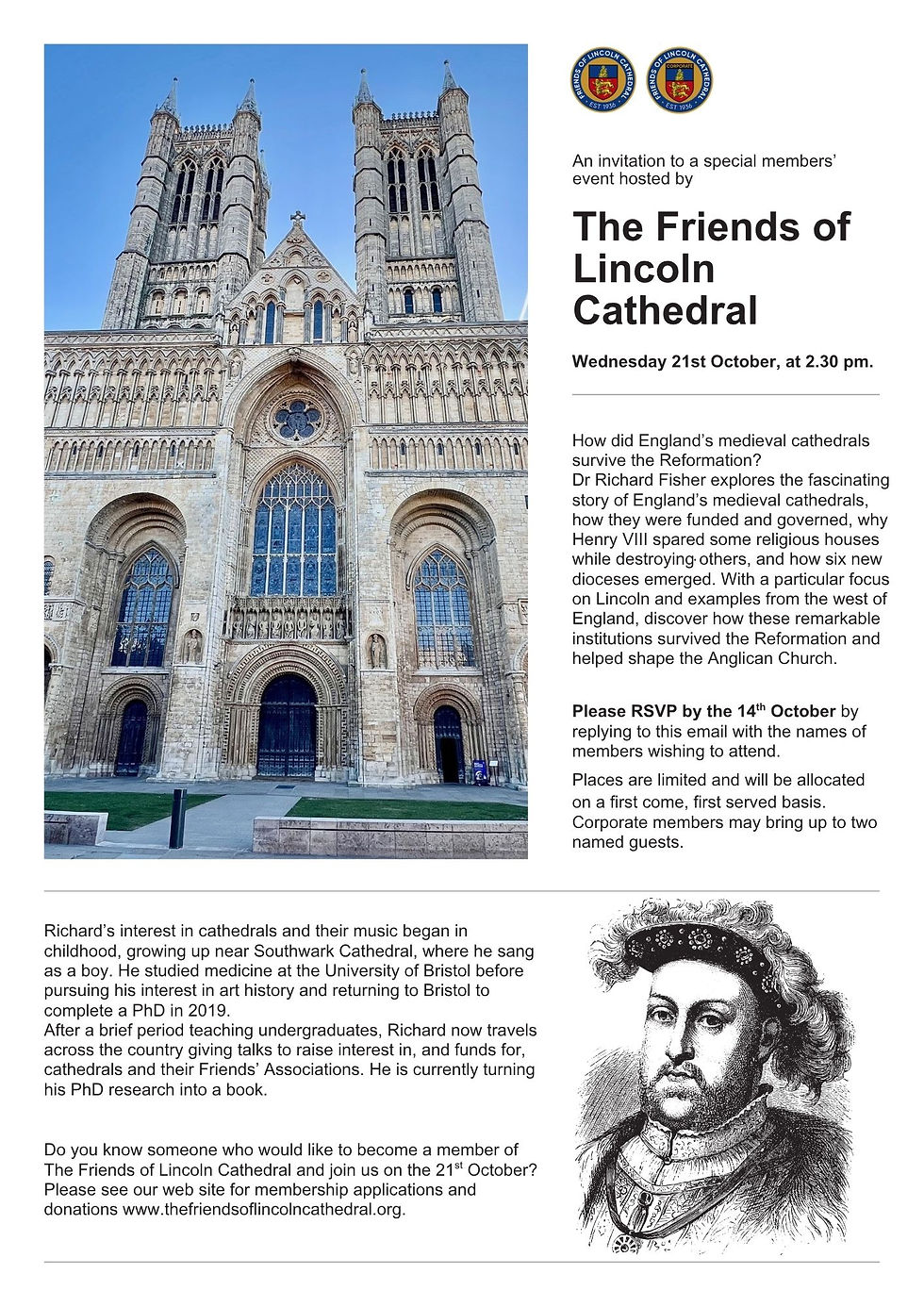
What makes this especially meaningful for us in Lincoln is that one of the original 1215 copies of Magna Carta is owned by Lincoln Cathedral and is preserved here, at Lincoln Castle—just steps from the Cathedral.
This is not simply a local treasure. It is a document that helped shape the English Bill of Rights, the U.S. Constitution, and the very idea of democratic governance.
When American lawmakers applauded the King’s reference to Magna Carta, they were—whether consciously or not—applauding something that physically resides in Lincoln.
From Medieval Lincoln to the White House
Lincoln’s connection to the United States goes even deeper.
Katherine Swynford—who lived in Lincoln and is buried at Lincoln Cathedral—is a key ancestral figure in British royal and noble lineages. Through her descendants, her bloodline connects to numerous figures in global history, including six, maybe seven, U.S. Presidents.
This extraordinary genealogical thread means that Lincoln is not just symbolically connected to American democracy—it is personally connected through ancestry.
A Shared Inheritance
In his speech, the King spoke of “interlinked destinies” between the UK and the United States.
Nowhere is that idea more tangible than in Lincoln: a cathedral that has stood for nearly a thousand years, a castle that safeguards one of the world’s most important legal documents, and a city whose history echoes in the founding principles of another nation.
Why This Matters Today
At a time when democratic values are being tested across the world, the King’s words were a timely reminder: that the principles of law, liberty, and accountability are not modern inventions—they are inherited responsibilities.
And here in Lincoln, we are custodians of that inheritance.
For the Friends of Lincoln Cathedral, this is a moment to reflect: that our city is not just a place of
history—but a place that continues to shape the present.
From the fields of Runnymede in 1215 to the halls of Congress in 2026, the story of Magna Carta—and of Lincoln—continues to resonate.
#Lincoln #LincolnCathedral #LincolnCastle #HistoricLincoln #MagnaCarta #KingCharles #POTUS #Congress


Comments